We're all told to "drink more water" — but that's only half the sentence. The water should also be clean. Your body is roughly 60% water, and every glass either helps it run well or quietly adds a few things it then has to deal with. Here's the honest, no-scaremongering case for clean, filtered water, and why it's one of the easiest upgrades you can make to how you feel each day.
Your body literally runs on water
Around 60% of the adult human body is water (it's closer to 75% in newborns). It isn't just sitting there — water does constant work:
- Regulates your body temperature through sweat and circulation
- Carries oxygen and nutrients to every cell
- Flushes waste out through your kidneys
- Cushions your joints and protects your spinal cord and brain
- Keeps digestion moving and skin functioning normally
Lose just 1–2% of your body's water and you start to feel it before you even feel thirsty.
Hydration and how you feel day to day
Studies on mild dehydration consistently link a small drop in body water to lower concentration, slower reaction time, headaches, fatigue and a flatter mood. In Australia's climate — long hot summers, high UV, and air-conditioning that quietly dries you out — it's easy to run a litre short without realising. The benefits of simply staying topped up are unglamorous but real:
- Steadier energy and focus through the afternoon
- Fewer "I think I need a coffee" slumps that are actually mild dehydration
- Healthy kidney function and waste removal
- Normal digestion and regularity
- Skin that's better supported from the inside
None of this requires a special product — just water you'll actually reach for. Which brings us to the catch.
Why "clean" matters, not just "wet"
Australian mains water is genuinely safe to drink (we wrote an honest breakdown of exactly how safe in Is Australian tap water really safe?). But "safe" under the guidelines still allows a list of things most people would rather not sip every day for the next 30 years:
| What's commonly in tap water | Why it's there |
|---|---|
| Chlorine & chloramine | Disinfect the supply between the plant and your tap |
| Disinfection by-products | Form when chlorine reacts with organic matter |
| Trace lead, copper, nickel | Usually leached from older household pipework |
| Microplastics | Present at low levels, with no national limit (more here) |
| Trace PFAS | "Forever chemicals" found at trace levels in some networks (more here) |
None of these will make a healthy adult sick at the levels allowed. The question is simply whether you want them in your daily glass — and a good filter lets you say no.
The taste effect: clean water means you drink more of it
Here's the most underrated health benefit, and it's behavioural. Water with no chlorine smell and no metallic edge is water people actually reach for — instead of soft drink, cordial or "I'll just have a coffee". Families tell us the same thing within a week of switching: once the water in the jug tastes like nothing at all, everyone drinks more of it, and the kids stop asking for juice. Better hydration follows better taste. That's a genuine wellbeing win that has nothing to do with removing any single contaminant.
It's not only about drinking — skin, hair and showering
The same chlorine that keeps the supply safe also strips natural oils from skin and hair. For people with eczema, dry skin or a sensitive scalp, dechlorinated shower water is often noticeably gentler — which is exactly why many households filter the whole house, not just the kitchen tap. We dug into this in what chlorine in your shower actually does.
What filtration actually does
A good filter removes what you don't want and leaves water as water. In short (the full breakdown is in filter stages explained):
- Activated carbon removes chlorine, tastes and odours, and many chemical contaminants
- Sediment & fine filtration catch dirt, rust and particles
- UV sterilisation deals with microbes without any chemicals
The result is water that's clean, fresh and pleasant — the kind you finish, then pour again.
Two easy ways to get clean water at home
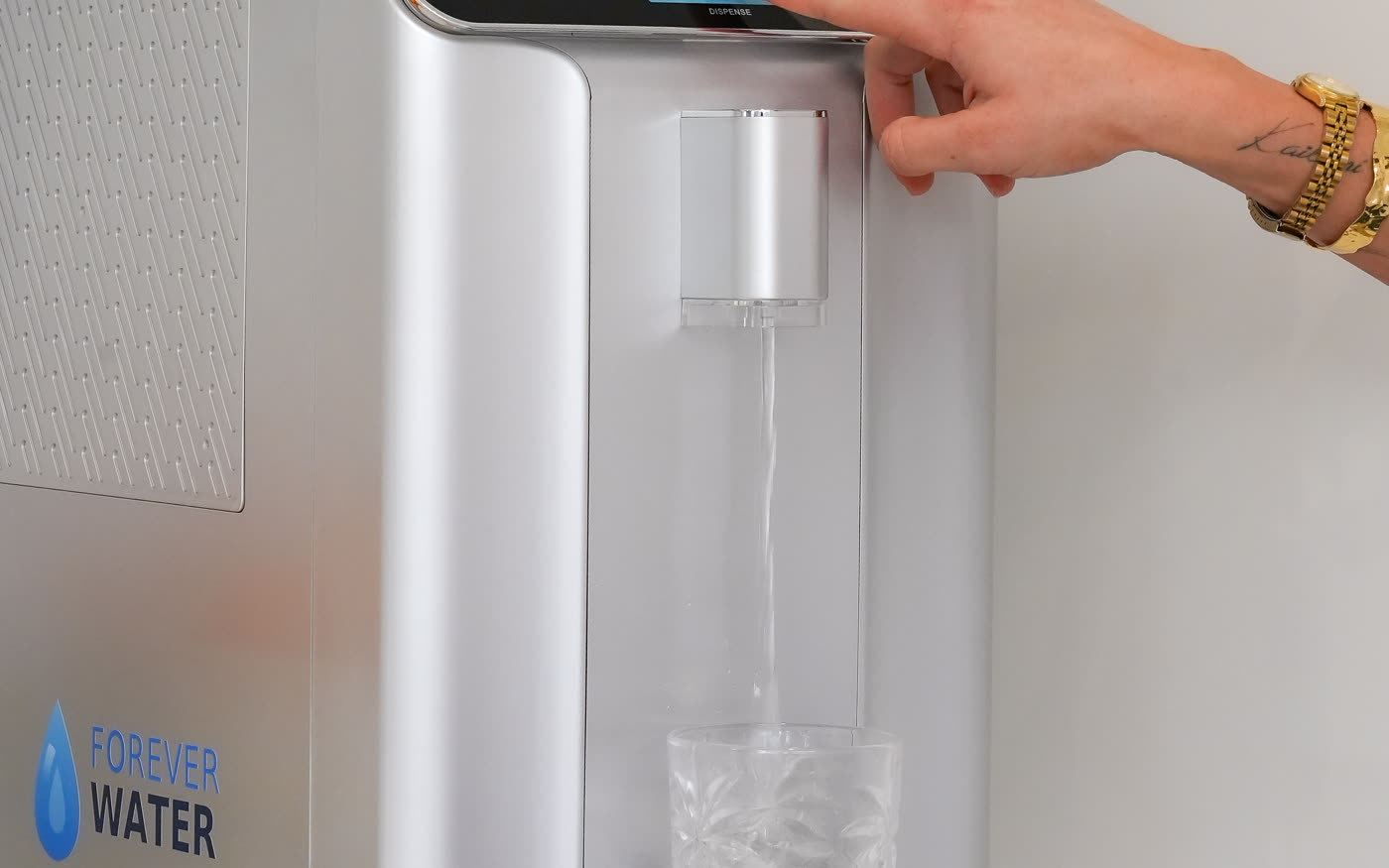
- The Forever Water A10 ($1,650) — a countertop machine that makes pure drinking water from the humidity in your air, filters it (carbon + ultrafiltration + carbon block) and finishes it with UV, served chilled. No plumbing — just plug it in. Best for ultra-clean drinking water on the bench.
- The Whole House HPF-3 ($3,999 installed) — plumbed onto your home's water inlet so every tap, shower and appliance gets filtered water. Best for chlorine-free showers, softer skin and protecting your appliances.
The honest bit
Clean water isn't a medicine and won't cure anything on its own — and to be clear, Australian tap water is safe to drink. But hydration is one of the most basic inputs to feeling good, and taking out the things you'd rather not drink makes it genuinely easier to hydrate well, every single day. That's the whole pitch — no panic required.
Read next: Is Australian tap water really safe? · Whole-house vs. under-sink — which one?