Microplastics in Bottled Water: What Australians Need to Know in 2026
In this guide we break down how microplastics get into bottled water, what the research actually says, the Australian context, and the cleaner alternatives that don't involve plastic at all.
A widely cited peer-reviewed study tested 259 bottles of water from 11 brands across nine countries. 93% contained microplastic particles — and Australian-bought brands weren't excluded. Years on, little has changed, and Australians still buy around $2 billion of bottled water a year, much of it single-use PET.
Here's the short, honest summary of what's in your bottle, what it means for your body, and the alternatives that don't involve plastic at all.
How microplastics get into bottled water
There are two main routes:
- The bottle itself. Heat — a hot car, a sun-warmed loading dock, a long shipping container ride — accelerates leaching of microplastic and BPA-related compounds from the PET shell into the water.
- The bottling line. Most bottling involves plastic-on-plastic contact. Caps in particular can generate fragments under pressure.
The 2018 study (commissioned by Orb Media, analysed at the State University of New York) detected an average of 325 plastic particles per litre. Some samples had far more.
What the WHO actually says
In 2019 the World Health Organization concluded that microplastics in drinking water "do not appear to pose a health risk at current levels" — while explicitly flagging that long-term studies haven't been done.
In plain terms: there isn't strong evidence it's harmful, and there isn't strong evidence it's safe. They recommend reducing exposure as a sensible precaution.
The Australian context
The Australian Federal Department of Health relies on WHO guidance and hasn't set a national microplastic limit for drinking water. Some plastic-related contaminants are monitored in groundwater (especially around PFAS sites), but bottled-water testing is largely industry self-regulated.
Independent Australian testing reported by consumer groups has found microplastics across still bottled-water brands sampled.
How to actually avoid it
Three real options for Australian households:
- Filter your tap water at the point of use. A good carbon-block filter is commonly used to reduce particles >0.5µm. Cheap, but only handles one tap.
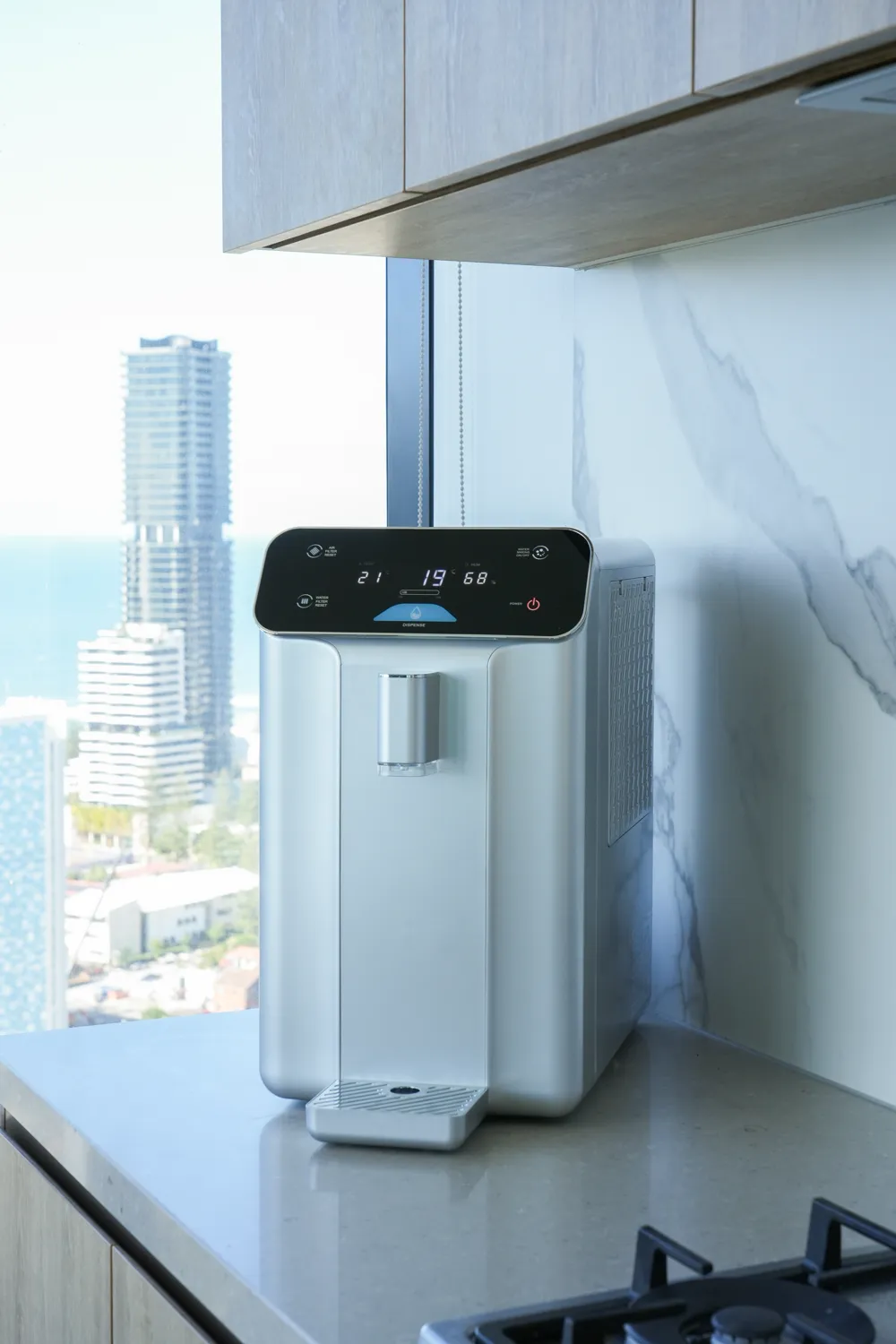
- Make your own water from the air. Atmospheric water generators like our Forever Water A10 condense moisture from the air and run it through multi-stage filtration plus UV.
- Filter your whole home's incoming water. A whole-house filtration system like the HPF-3 sits on your inlet pipe and is designed to help reduce sediment, chlorine and scale at every tap, shower and appliance.
The financial side
An Australian family of four drinking 8 L/day of bottled water spends roughly $1,650–$1,800 per year. Over 10 years that's $16,500–$18,000 — and it produces around 18,000 plastic bottles bound for landfill or recycling (Australia recovers only a portion of PET). For perspective, a Forever Water A10 costs $1,650 once and produces up to 10 L/day. See ways to pay.
The bottom line
The evidence on microplastics is still developing, but the precautionary case for reducing exposure is reasonable — and the financial and environmental case against habitual bottled water is strong. Switching to filtered tap water or a home water generator costs less over time, ends the plastic, and gives you back the cupboard space.
Sources & further reading
- World Health Organization — Microplastics in drinking-water (2019)
- Australian Drinking Water Guidelines (NHMRC)
- Orb Media / State University of New York — bottled water microplastics study (2018)
- Australian consumer testing on bottled water (CHOICE / ABC)
- Activated carbon & UV in water treatment — general reference literature
This article is general information only and is not medical advice.
Forever Water is an Australian-owned water brand from the team behind Forever Solar, supporting households with drinking water and whole-house filtration.